Crashdown
Swing a wrecking ball at a building and watch it come down properly — a Lua physics game compiled to WebAssembly, driven by exactly one slider.
Play it: crashdown.bmux.sh
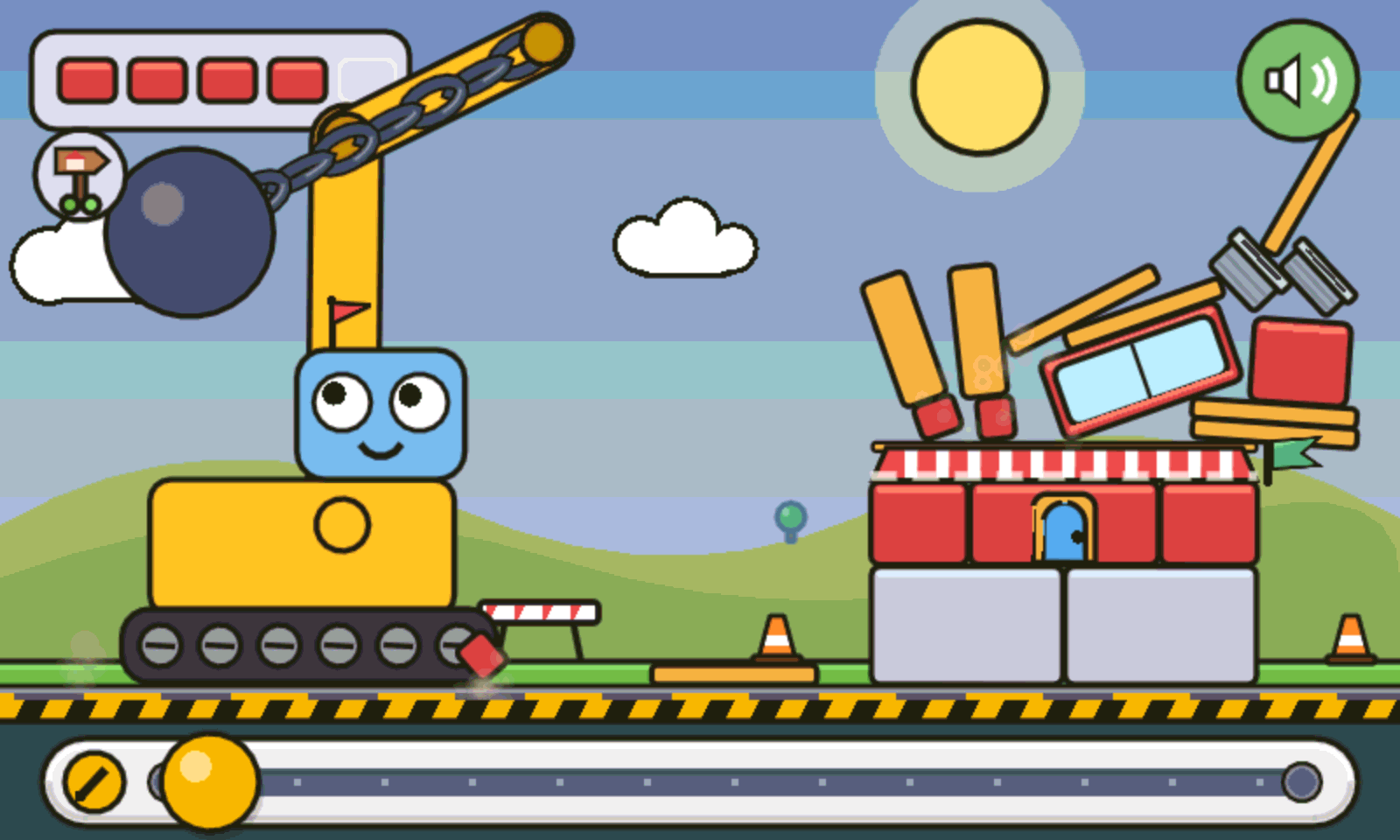
What it is
A building, a crane, four swings. Pull the slider, let go, and the ball goes where the physics sends it. The structure is real rigid bodies stacked on each other, so it does not play a collapse animation — it falls over, in whatever order the hit decides, and awnings and roof beams end up where they end up.
The whole interface is one slider across the bottom of the screen and a row of pips for how many swings you have left. No menu to open, no second verb, no text to read. A child who cannot read can play this, and the small set of red squares in the corner is the only scorekeeping.
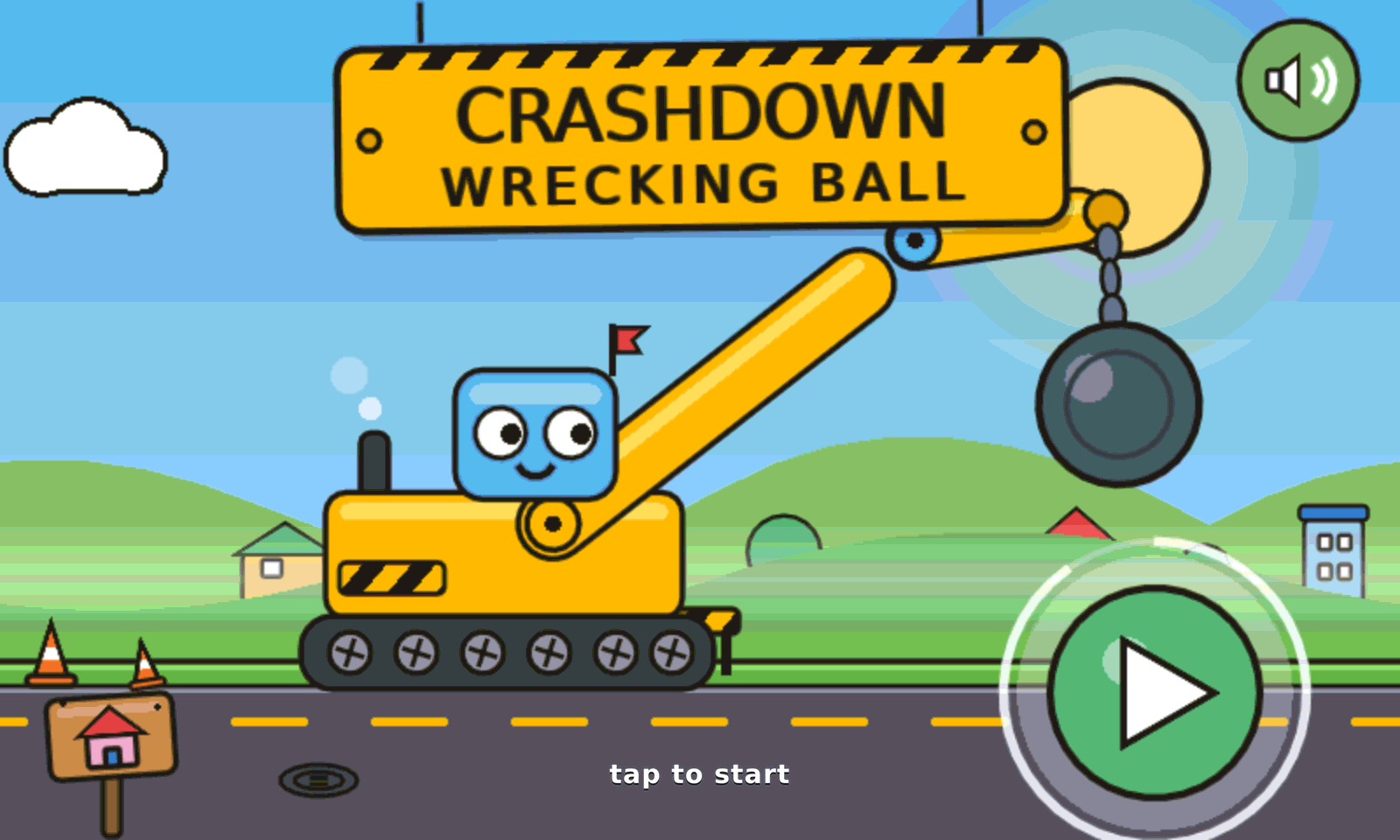
Why it’s the odd one out
Every other game here is JavaScript in a browser. This one is Lua, written against LÖVE — a desktop game framework — and compiled to WebAssembly to run on the web.
That is a genuinely different bet. You give up the browser-native toolchain and anything that wants a DOM, you carry a runtime in the download, and you debug through a compiler you did not write. What you buy is a 2D framework with physics already in it, a language that is pleasant for exactly this kind of code, and a build that would also run as a real desktop application without being rewritten.
For a game whose entire design is one slider and a pile of rigid bodies, that trade is the right way round. The hard part was never the web.
Where it is
Live and playable, and the arcade still files it as in progress — more buildings, more swings, and a reason to care about the fourth one.
Technical details
| Framework | LÖVE (Lua), compiled to WebAssembly via love.js |
| Physics | Rigid-body stacks — real collapse, no canned animation |
| Input | One slider, tap to swing. That’s the whole control set |
| Audio | Single mute toggle |
| Platform | Any modern browser; the same source would build for desktop |